
Hollywood Insider - News Entertainment & Culture

Substance & Meaningful Entertainment

Against Gossip & Scandal

Independent Media Network

Global Stories From Local Perspective

Factual Culture News

From Athlete to Auteur

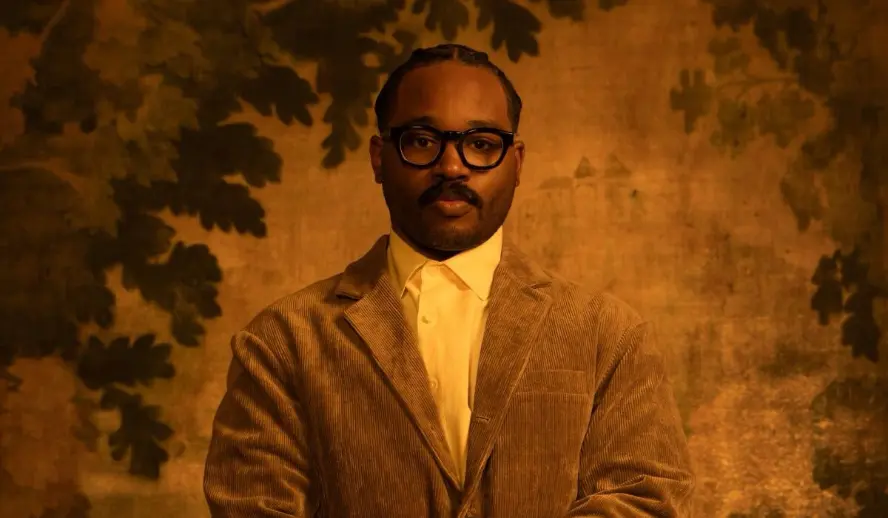
Ryan Coogler pursued his ambitions to be a football player well into college. However, while attending Saint Mary’s College of California, an English professor, Rosemary Graham, recognized his talent for storytelling and encouraged him to explore screenwriting. Coogler later transferred to Sacramento State and ultimately enrolled in the USC School of Cinematic Arts, where he directed three short films: ‘Locks’ (2009), ‘Fig’ (2011), and ‘The Sculptor‘ (2011), earning him critical recognition early on.

Though Coogler transitioned from athlete to artist, the team-oriented mindset he developed as a football player has remained a defining element of his approach to the art form. From the start of his career, he has cultivated a creative circle that has grown with him, film after film. Actor Michael B. Jordan has starred in all five of Coogler’s feature films, prompting comparisons to legendary filmmaker-actor duos like Martin Scorsese and Robert De Niro, or Spike Lee and Denzel Washington. Editor Michael P. Shawver and composer Ludwig Göransson– both USC classmates- have been equally instrumental, shaping the rhythm and emotional resonance of Coogler’s work.

Production designer Hannah Beachler has collaborated on all but one of his projects, earning an Academy Award for her work on ‘Black Panther‘ and continuing her contributions on ‘Sinners’. Producer Sev Ohanian, who first joined Coogler on ’Fruitvale Station’, has remained a trusted partner and co-founder of their production company, Proximity Media. Perhaps most personally, Zinzi Coogler– his wife- has become an essential figure in his creative life, co-producing several films and helping to steer the company’s broader artistic vision.

Together, this tight-knit collective has become the foundation of Coogler’s distinct Cinematic voice- one defined by trust, collaboration, and a shared commitment to telling deeply rooted Black stories with global resonance.

Things to do: 

  1. Subscribe to The Hollywood Insider’s YouTube Channel, by clicking here.
  2. Limited Time Offer – FREE Subscription to The Hollywood Insider
  3. Click here to read more on The Hollywood Insider’s vision, values and mission statement here – Media has the responsibility to better our world – The Hollywood Insider fully focuses on substance and meaningful entertainment, against gossip and scandal, by combining entertainment, education, and philanthropy.

The Sins of the Father

Beyond his core team of collaborators, another defining consistency throughout Ryan Coogler’s filmography is thematic: the exploration of generational trauma, particularly through the lens of the sins of the father. This motif first appears in his debut feature, ‘Fruitvale Station,’ where Coogler presents a portrait of Oscar Grant in his final 24 hours. As Steven Boone of RogerEbert.com describes, the film offers “a sample of the daily routine and pressures” that shape Grant’s life, framing these moments in an artistically constructed narrative. Boone also notes that Grant’s “explosive side stems more from the fact that he shares little of his mental burdens with anyone.” However, Boone asserts that the film “knows better than…to wag its finger,” instead allowing the complexities of Grant’s character to unfold without overt moral judgment.

That exploration of flawed legacies continues in ‘Creed’, where Coogler centers the son of boxing icon Apollo Creed- a figure beloved both within the narrative world and by fans of the ‘Rocky’ franchise. Donny Creed is a child born from an affair, left to grow up in the long shadow of a father he never knew. The film questions: how does one carry a name they didn’t ask for, a legacy that feels more like a burden than a blessing?

In ‘Black Panther’ and ‘Wakanda Forever’, the motif takes deeper root. T’Challa must reckon with the choices of his father, King T’Chaka- choices that include the secret murder of his own brother, N’Jobu, and the abandonment of his nephew, Erik Killmonger. These actions sow a generational wound that eventually returns in the form of Killmonger’s rage, confronting the son with the sins of the father. In ‘Wakanda Forever’, the idea expands even further: the central antagonist, Namor, embodies a lineage of pain rooted in colonization. Though not a literal father, Namor inherits a worldview shaped by ancestral trauma. His militant protectionism of Talokan is vengeance handed down through history- a child of the colonized turned into a warrior, ready to wage war to prevent further loss. His wrath is generational.

This ongoing meditation finds one of its most surreal and potent expressions in Coogler’s latest film, ‘Sinners’. In a standout moment, the more bombastic of the twin brothers portrayed by Michael B. Jordan tells young Sammie (Miles Caton) that their father was considered “evil.” The guitar Sammie uses throughout the film- a conduit for his electric performances that channel African drummers, Afrofuturist guitar riffs, and even Chinese dancers- becomes more than a musical instrument. It is a metaphor: for inheritance, for burden, for memory. It is that which the past hands down, and the struggle to wield it for good, despite its dark origins. Sammie’s music, performed before a crowd of sharecroppers in a juke joint, becomes a supernatural beacon- accidentally attracting the vampires that stalk the narrative. Yet, in the end, as Stack (Jordan) reflects on that night, he tells Sammie that they were “free.” In that one word, the film circles back to the theme: what we inherit may be cursed, but it can also be reshaped. Even “evil” legacies can be transfigured into freedom.

WATCH THE TRAILER of the Film and the Revolution: ‘Can I Go Home Now?’ 

The Children Around the World Continue to Ask the question

The Financial and Cultural Success of ‘Black Panther’

Upon its release in February 2018, ‘Black Panther’ became a global phenomenon. The film grossed over $1.3 billion worldwide, making it not only one of the highest-grossing Marvel movies of all time but also the first- and so far only- Marvel Cinematic Universe film nominated for Best Picture at the Academy Awards. Domestically, it earned more than $700 million, placing it among the top-grossing films in U.S. history. And more than just box office triumphs, these films became cultural landmarks.

‘Black Panther’ received 7 Oscar nominations and won 3 Academy Awards: Best Costume Design, Best Production Design, and Best Original Score. Its sequel, ‘Black Panther: Wakanda Forever’ (2022), followed with a strong performance, grossing over $859 million worldwide, despite the challenges of recasting and reconfiguring the story after the death of lead actor Chadwick Boseman. It earned 5 Oscar nominations, including Best Supporting Actress for Angela Bassett- the first actor ever nominated for a performance in a Marvel film- and won Best Costume Design, making Ruth E. Carter the first Black woman to win multiple Oscars in any category. Critics praised both films for their direction, cultural significance, and emotional depth, with ‘Black Panther’ receiving a 96% rating on Rotten Tomatoes. 

On a recent ‘Tonight Show’ appearance, Michael B. Jordan remarked that “[Ryan Coogler] hates compliments.” That makes me wonder how Coogler reacted to a certain article from Dr. Kalenda Eaton, a humanities scholar focused on African American western studies, where she stated in an article from the Indiana University Press, “Upon its debut, Marvel’s Black Panther, directed by Ryan Coogler, had without a doubt the most significantly positive black cultural impact worldwide since the 2008 election of President Barack Obama.”

With financial and critical success of this magnitude, what does one do next? Faced with such pressure, a director might feel the urge to take on a grand, sweeping epic, as Michael Cimino did with what turned into his legendarily colossal flop ‘Heaven’s Gate’

Related article: Why Queen Elizabeth II Is One Of The Greatest Monarchs | Her Majesty Queen Elizabeth II of United Queendom of Great Britain & Northern Ireland (Video Insight)

Related article: Want GUARANTEED SUCCESS? Remove these ten words from your vocabulary| Transform your life INSTANTLY

Related article: Streaming Services Are Killing Movie Theaters

Coogler’s Effective Yet Familiar Take on Vampire Horror

Instead of falling into the typical trap of crafting a sweeping, “important” epic- which many might have expected from a filmmaker of his stature, given praise like that from Dr. Kalenda Eaton- Ryan Coogler chose to take a different approach. He saw this as an opportunity to infuse diversity into a genre that is often seen as formulaic and predictable: the vampire horror shoot-’em-up. Coogler’s choice not only revitalizes the genre but also pushes the boundaries of multiracial casting, specifically within the context of a period piece.

‘Sinners’ is on its way to history. The supernatural shoot-em-up has already grossed over $272 million, making it the 6th horror film in history to do so. The film debuted on April 18, 2025, with a $48 million opening, marking the best debut for an original film since ‘Us’ (2019). In its second weekend, the film showed remarkable staying power, with a modest 4.9% drop, earning $45.7 million. By its third weekend, it brought in another $33 million, experiencing a slight 28% decline, which is exceptional for a horror release. The success of ‘Sinners’ has been attributed to strong word-of-mouth, Michael B. Jordan’s compelling performance, and its unique setting- blending African American folklore with supernatural horror in 1930s Mississippi. With its current momentum, ‘Sinners’ is also closing in on the domestic box office total of ‘Gravity’, which pulled in $274 million back in 2013, which made it the highest-grossing original film of the 2010s. Now, with just a few thousand dollars separating the two, ‘Sinners’ is poised to break that decade-old record and become the top-earning original movie released since then.

For updated box office data, ‘Sinners’ can be tracked on Box Office Mojo and The Numbers.

When it comes to “bankability,” those numbers don’t lie. It’s one thing when success is driven by a well-established franchise like with ‘Creed’ or ‘Black Panther’/‘Wakanda Forever’. Critics and skeptics may argue that the franchises and star power are the key factors behind the success. However, with ‘Sinners’- Coogler’s first entirely original script- charting those kinds of numbers, the financial success speaks for itself.

Although ‘Sinners’ marks Coogler’s first wholly original film- in that it is based on his own script and not an adaptation of any existing source material- the concept itself is not entirely novel. At first glance, the film might seem like a clear descendant of something like ‘From Dusk Till Dawn.’ However, after seeing the film, one could draw a stronger comparison to ‘The Evil Dead,’ particularly in the way it centers around a group of people who venture to a remote location looking for a good time, only to find themselves confronted by an evil that infects most of them.

There is an inextricable connection between the blues and demons throughout American folklore. A cultural thread that can be traced back to the legendary tale of Robert Johnson. According to this legend, Johnson made a deal with the devil at a crossroads to gain unparalleled mastery of the guitar. While the veracity of this legend is debated, it has become an essential part of Johnson’s legacy and blues music folklore, setting the stage for the thematic undercurrent of ‘Sinners.’

One of the film’s most surprising visual inspirations comes from ‘Puss in Boots: The Last Wish,’ where Death’s red-glowing eyes influenced the vampires’ defining feature in ‘Sinners.’ This unanticipated reference proves how Coogler pulls from a variety of sources to craft his own unique vision.

Critic Robert Daniels of RogerEbert.com bemoaned the fact that ‘Sinners’ “conforms to genre conventions.” But what’s wrong with that? Coogler doesn’t need to reinvent the wheel to make a solid, enjoyable movie like ‘Sinners.’ It’s a streamlined monster battle that doesn’t get bogged down in the minutiae of vampire lore, which ultimately makes it all the more effective as a hang-out movie.

By Joseph Tralongo

Click here to read The Hollywood Insider’s CEO Pritan Ambroase’s love letter to Cinema, TV and Media. An excerpt from the love letter: The Hollywood Insider’s CEO/editor-in-chief Pritan Ambroase affirms, We have the space and time for all your stories, no matter who/what/where you are. Media/Cinema/TV have a responsibility to better the world and The Hollywood Insider will continue to do so. Talent, diversity and authenticity matter in Cinema/TV, media and storytelling. In fact, I reckon that we should announce “talent-diversity-authenticity-storytelling-Cinema-Oscars-Academy-Awards” as synonyms of each other. We show respect to talent and stories regardless of their skin color, race, gender, sexuality, religion, nationality, etc., thus allowing authenticity into this system just by something as simple as accepting and showing respect to the human species’ factual diversity. We become greater just by respecting and appreciating talent in all its shapes, sizes, and forms. Award winners, which includes nominees, must be chosen on the greatness of their talent ALONE.

I am sure I am speaking for a multitude of Cinema lovers all over the world when I speak of the following sentiments that this medium of art has blessed me with. Cinema taught me about our world, at times in English and at times through the beautiful one-inch bar of subtitles. I learned from the stories in the global movies that we are all alike across all borders. Remember that one of the best symbols of many great civilizations and their prosperity has been the art they have left behind. This art can be in the form of paintings, sculptures, architecture, writings, inventions, etc. For our modern society, Cinema happens to be one of them. Cinema is more than just a form of entertainment, it is an integral part of society. I love the world uniting, be it for Cinema, TV, media, art, fashion, sport, etc. 

More Interesting Stories From The Hollywood Insider

Want GUARANTEED SUCCESS? Remove these ten words from your vocabulary| Transform your life INSTANTLY

A Tribute to Martin Scorsese: A Complete Analysis of the Life and Career of the Man Who Lives and Breathes Cinema 

Do you know the hidden messages in ‘Call Me By Your Name’? Find out behind the scenes facts in the full commentary and In-depth analysis of the cinematic masterpiece

A Tribute To The Academy Awards: All Best Actor/Actress Speeches From The Beginning Of Oscars 1929-2019 | From Rami Malek, Leonardo DiCaprio To Denzel Washington, Halle Berry & Beyond | From Olivia Colman, Meryl Streep To Bette Davis & Beyond

In the 32nd Year Of His Career, Keanu Reeves’ Face Continues To Reign After Launching Movies Earning Over $4.3 Billion In Total – “John Wick”, “Toy Story 4”, “Matrix”, And Many More

Author

  • Joseph Tralongo

    Joseph Tralongo is a playwright and screenwriter who approaches storytelling with a deep respect for film’s ability to distill human behavior into meaningful moments. His personal work- i.e. his plays, screenplays, and films- leans into semantic tension, moral ambiguity, and the quiet unraveling of social dynamics- not to preach, but to parse. For him, writing is a slow excavation of truth through craft. With a background in theatre and independent film, he brings a structural precision and dramatic instinct to every film he reviews. Hollywood Insider’s mission to champion substance over spectacle aligns with Joseph’s belief that storytelling should investigate, not dictate.

    View all posts

Ryan Coogler returns with ‘Sinners’, a genre-bending descent into fear, faith, and identity that reclaims horror as a site for Black storytelling. With Michael B. Jordan delivering his most commanding performance yet, Coogler advocates for the power of theatrical Cinema and the future of Black genre filmmaking. Ryan Coogler’s newest venture, ‘Sinners,’ is nothing short of a resurrection. Blending operatic horror with socially resonant period storytelling, the film threads together hauntingly beautiful visuals, musical grandeur, and a sobering critique of the trauma of the Jim Crow South. With ‘Sinners,’ Coogler brings back a familiar team to reassert his position as one of the most visionary young directors working today, while marking a daring new direction in the Black horror sphere. 


Things to do: 

  1. Subscribe to The Hollywood Insider’s YouTube Channel, by clicking here. 
  2. Limited Time Offer – FREE Subscription to The Hollywood Insider
  3. Click here to read more on The Hollywood Insider’s vision, values and mission statement here – Media has the responsibility to better our world – The Hollywood Insider fully focuses on substance and meaningful entertainment, against gossip and scandal, by combining entertainment, education, and philanthropy.


A Haunted Jim Crow South

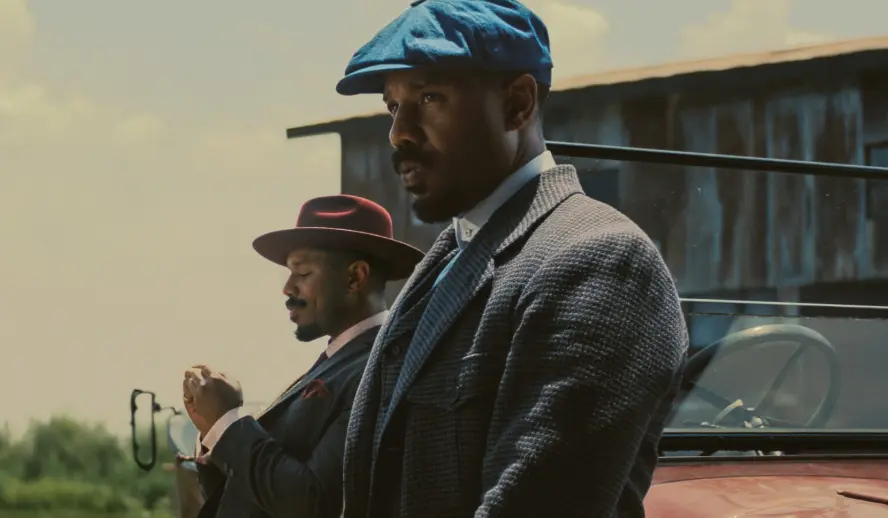
Set in the Mississippi Delta during the summer of 1932, ‘Sinners’ tells the story of twin brothers Elijah “Smoke” and Elias “Stack” (both played impeccably by frequent Coogler collaborator Michael B. Jordan), who return to their hometown to open a lavish juke joint. What begins as a slow-burn examination of a diverse Deep South community and its residents’ search for catharsis quickly spirals into a harrowing confrontation with a clan of white vampires posing as folk musicians, the ghosts of Jim Crow sporting banjos and drooling blood. 


Ryan Coogler delivers a feverish epic, a beautiful ode to Black music and resilient culture, all the while making it sexy, sinister, and spiritual. ‘Sinners’ is as much about the terrors of racism as it is about the resilience of Black and POC communities in America, the seduction of power, and the thin line between salvation and damnation. 

WATCH THE TRAILER of the Film and the Revolution: ‘Can I Go Home Now?’ 

The Children Around the World Continue to Ask the question

Horror in Sharp 65mm

Set in 1932 Mississippi, ‘Sinners’ pulls out all the stops for period filmmaking. Collaborating with DP Autumn Durald Arkapaw, ‘Sinners’ receives a grandeur rarely seen in horror due to its 65mm IMAX format. Sweeping landscapes of cotton fields, swampy warm juke joints, and rustic southern towns gleam with texture and depth. Lit for Black skin, the frame glows with deep blues and rich golds. The aspect ratio of the film creatively shifts at key moments, heightening drama and drawing attention to the growing claustrophobia of our ensemble’s impending doom. The sun becomes a ticking time bomb, beautifully illuminating the symbol of Black servitude, setting into the darkness that brings out monsters. Arkapaw and Coogler visualize the “sun down town”: as darkness encroaches, none of our main characters are safe. 


The production design of the film is impeccable. The juke joint itself is a vibrant, decadent haven for blues, booze, and Black life. Period-accurate signage indicates segregated spaces, and Chinese-owned stores ground the story in the historical realism of the real diaspora of Chinese immigrants into the Delta. The costuming of the characters, mainly the deep reds for the impulsive Stack and icy blues for the shyer Smoke, marks the twins’ complementary yet differing nature. Hailee Steinfeld’s Mary dons an innocent-seeming pink silk dress that, under the lights of the juke joint, melts into a sexy, seductive look. 

The sound design is as layered as the visuals. From the twang of guitar strings to the shriek of vampire screams, every detail is precise and complements the incredible score. The bass rips through the theater, like incoming footsteps. 

Related article: Why Queen Elizabeth II Is One Of The Greatest Monarchs | Her Majesty Queen Elizabeth II of United Queendom of Great Britain & Northern Ireland (Video Insight)

Related article: – Want GUARANTEED SUCCESS? Remove these ten words from your vocabulary| Transform your life INSTANTLY

Related article: The Compelling History of Black Horror Films Showcases Cultural Significance – Hollywood Insider

Between Heaven and Hell Lies the Delta 

The film opens with its end: Sammie, nicknamed Preacher Boy (played by newcomer Miles Caton), arrives at the door of a church, bloodied, panting, and clutching a guitar neck, its body broken off. The doors fly open, and Preacher Boy pants as the congregation stares at him in horror.

A day earlier, Smoke and Stack slide back into the Delta, the twin mobsters return from Chicago with plans to give back to their community (or make more money?) with a new nightclub. They pick up their cousin, Preacher Boy, as well as the always drunk but ever-charming Delta Slim, played by the incomparable Delroy Lindo, to recruit them for their musical talents. Stack encounters his ex-girlfriend Mary, who angrily demands an explanation for his abandoning her seven years prior. Hailee Steinfeld commands the screen as Mary, the audience does not know whether she is to be trusted. Smoke solemnly visits his own home, mourns at the grave of his stillborn child, and reunites with his ex-wife, Annie (Wunmi Mosaku). As the club opens to the public, the community pours their wares, talents, and effort into getting it up and running. 

As the club opens, Preacher Boy’s music transcends. Preacher Boy’s voice and his Dobro Cyclops guitar become a magical conduit. Caton’s deep, silky voice is pure perfection, and his vocals quite literally “pierces the veil between life and death.” This euphoria is short-lived, as vampires descend on the club. Led by Irish-born Remmick (Jack O’Connell), the white vampires are colonist creatures who seek to co-opt Black culture and control its creators. The trio of vampires are given more depth by their Irish heritage, as folks who most likely fled from Christian colonization in the area at the time, reflecting the vicious cycle of colonial violence. 


The Show-Stopping Musical Sequence: A Black Mythology 

The musical sequence at the center of ‘Sinners’ has been widely discussed online, and for good reason. It is a showstopping Coogler set-piece, the camera floating through steamy bodies and musical eras. As Preacher Boy belts, Black musicians from every period, from centuries-old tribal African drummers to a Slash-esque 1980s electric guitarist, enter the scene. The ambitious one-shot erupts into a mythic montage, past, present, and future colliding. Gospel singers, rappers, breakdancers, and Black folk musicians create a sultry, sacred moment. There are also ancient Chinese dancers present, reflecting a cultural symbiosis within the Delta and unity between oppressed groups. Here, Coogler crafts a new Black mythology. He reminds us that Black music is the tenant of American musical culture, that communal musical experiences have been a way for Black people to resist their oppression and experience joy. It is joy and grief braided together, as terror looms outside the sanctified walls of the club. 

What follows is a terrorizing, action-filled battle between vampire and mortal. The last people standing must rely on Annie’s knowledge of vampirism, including their rejection of garlic and silver, and their need to be invited in to attack, in order to survive their ordeal. Preacher Boy must shatter his guitar to kill a vampire. Stack is turned into a vampire by Mary, who used her whiteness to attempt to shoo away the Irish folk singers. This cataclysmic, bloody, well-choreographed action deserves to be seen in a theater, on massive 65mm, the sound shaking your seat. 


Related article: EVOLUTION: Every Ryan Gosling Role From 1995 to 2020, All Performances Exceptionally Poignant

Related article: EVOLUTION: Every Henry Cavill Role From 2001 to 2021, All Performances Exceptionally Poignant

Related article: All Best Actor/Actress Speeches From The Beginning Of Oscars 1929-2019 | Hollywood Insider

Related article: ‘Dickinson’ Season 2 Delves Deeper Into the Life of the Legendary Poet Starring Hailee Steinfeld – Hollywood Insider


From Fruitvale Station, to the Ring, to Wakanda, to the Delta

Coogler has always been obsessed with legacy and has used his rising star to spotlight Black stories and make heroes of Black people. From the brutal police violence of Fruitvale Station, wherein victim Oscar Grant is given 90-minutes to breath and live again after his real-life murder, to the intergenerational trauma and brilliant action of the Creed trilogy, to Black Panther’s Afro-utopian vision, his protagonists are young Black men caught in systems they did not build, but must navigate. 

With Sinners, Coogler turns his attention to the past for the first time– not for the sake of nostalgia, but because of unfinished business He mixes period drama and horror to dramatize the myths Black people were told about the end of slavery and the freedom of Jim Crow, and the way they did everything to fight back. He borrows from Westerns, musicals, and even classical vampire films, remixing them with something wholly new and deeply sociological. 

Black Horror, Reinvented 

‘Sinners’ is a welcome addition to the growing Black horror renaissance, but is of a grander scale than that of ‘Get Out’ or ‘His House,’ representing the growing power of Black auteurs to demand large budgets for genre work. Coogler demanded ownership of the film’s rights to return to him in 25 years, a deal only pulled off by household names like Tarantino. The box office success of the film represents the still-present power of creative, non-IP horror projects. Black audiences are often under-predicted for box office success, leading prognosticators to grossly underestimate the success of ‘Black Panther’ in 2018. 

The film is a challenging allegory, yet it continues to draw crowds, spark debate, and intrigue. ‘Sinners’ dives headfirst into Black spirituality and African lore. The vampires are not just metaphors, but bloody, sexy, and surreal colonizers. Remmick does not just desire blood; he desires to steal music, disrupt culture, and retake land. 

‘Sinners’ is also a blast. There is something feral about Jordan’s portrayal of Stack, something chaotic in the way Coogler lets his vampires party before they kill. Everyone is guilty of a little heathenry here, a very relatable message to audiences. 


Related article: Understanding the Star Wars Timeline

Related article: A Tribute to Francis Ford Coppola: One of Cinema’s Unforgettable Directors | ‘Megalopolis’, ‘The Godfather’ & More

Related article: #metoo Revolution: Powerful Questions That Need Answers

Related article: FACT-CHECKED Series: Timothee Chalamet and 32 Facts about The Young Superstar

Related article: ‘The Harder They Fall’: A Black-Led Western Revenge Film – Hollywood Insider


Blues as Battle Cry

Ludwig Göransson’s score is monumental. Previously working on the ‘Black Panther’ and ‘Creed’ franchises with Coogler, Göransson reaches new heights on ‘Sinners,’ crafting a transcendent medley of Delta blues, Irish folk, metal, gospel, and trembling bass. The music functions as a second script; many of the film’s key revelations are revealed through the script, the score being choreographed to the tempo of the dialogue delivered. 

Preacher Boy’s guitar summons ghosts. Pearline’s (Jayme Lawson) vocals seduce the undead. A musical motif rooted in Robert Johnson’s lore as a formative blues musician of the early 1900s appears every time a deal is struck.  The final sequence turns into a full-blown Afro-sonic exorcism, explosive electric guitar riffs extenuating the deep twang of the country score. 

Göransson recorded much of the score using period instruments and techniques, integrating the cast’s vocal and live performances. The sound is raw, holy, haunted, and unforgettable.


Related article:  Top 10 South Park Characters | Who Makes the Cut? Kenny, Chef, Butters, Towelie, Eric?

Related article: In-Depth Analysis | The Unexpected Queerness of ‘Bob’s Burgers’: Why the Show is an Animated Ally

Related article: Female R&B Artists and Female Rappers Are Dominating the Charts – Hollywood Insider


The Women of ‘Sinners’ 

Hailee Steinfeld’s Mary is a revelation. As a biracial, white passing woman caught between two worlds, her performance is sultry, smart, and stingingly bitter. She’s no damsel, she is the story’s spark. Her nuanced relationship with Stack is as sexy as it is tragic, their undying affection for each other causing their demise. 

Li Jun Li’s performance as the town’s Chinese shopkeeper, Grace Chow, adds crucial depth and texture to the historical epic. She helps the community of Black people who cannot get into white only stores, while the Chinese were often shut out from both White and Black only stores. She cares deeply for her family and is filled with righteous rage when the vampires threaten her daughter. Her final act of defiance, setting a vampire on fire, is one of the film’s boldest and most tragic moments, as the fire consumes her too. 

Wunmi Mosaku’s Annie grounded the film in Black spirituality and heart. Her traditions, often dismissed by men, become the group’s salvation. Her scenes with Smoke are tender and powerful. Coogler casting Mosaku, a dark-skinned, full-figured woman as his love interest and spiritual leader, rejects Hollywood norms and is a welcome step forward in filmic representation. 


Related article:  In-Depth Analysis | The Unexpected Queerness of ‘Bob’s Burgers’: Why the Show is an Animated Ally

Related article: EVOLUTION: Every Chris Evans Role From 1997 to 2020, All Performances Exceptionally Poignant

Related article: With ‘His House’, Netflix Delivers a Compelling Immigrant Horror Story – Hollywood Insider


Horror as History, Horror as Hope 

In ‘Sinners,’ to become a vampire is to be free of sun-soaked labor, to avoid death and maybe live into an era beyond oppression, but at what cost? Smoke, Stack, Sammie, and the women they love all face the same question: Is survival enough if it means losing your soul, making a deal with the devil? 

The mid-credits scene reveals that Stack and Mary have lived as vampires into the 1990s. They visit an aged Sammy at his club, seeing him playing a beautiful medley on stage.  They offer him a deal: an eternal life of music. Sammie refuses, admitting that that climactic night was the best and worst of his life. He asks Stack if his last day as a mortal was the best day of his life, too. “It was the last time I saw my brother,” Stack laments, “it was the last time I saw the sun.” 

‘Sinners’ is a film about the oppression placed on Black people, the remedies they are forced to consider, and the joy they maintain anyway. It’s about the price of freedom under white supremacy, the temptation of capitalistic power, and the deep roots of music, memory, and blood. In every sense, ‘Sinners’ is a symphony. 


By Leeann Remiker 

Click here to read The Hollywood Insider’s CEO Pritan Ambroase’s love letter to Cinema, TV and Media. An excerpt from the love letter: The Hollywood Insider’s CEO/editor-in-chief Pritan Ambroase affirms, We have the space and time for all your stories, no matter who/what/where you are. Media/Cinema/TV have a responsibility to better the world and The Hollywood Insider will continue to do so. Talent, diversity and authenticity matter in Cinema/TV, media and storytelling. In fact, I reckon that we should announce “talent-diversity-authenticity-storytelling-Cinema-Oscars-Academy-Awards” as synonyms of each other. We show respect to talent and stories regardless of their skin color, race, gender, sexuality, religion, nationality, etc., thus allowing authenticity into this system just by something as simple as accepting and showing respect to the human species’ factual diversity. We become greater just by respecting and appreciating talent in all its shapes, sizes, and forms. Award winners, which includes nominees, must be chosen on the greatness of their talent ALONE.

I am sure I am speaking for a multitude of Cinema lovers all over the world when I speak of the following sentiments that this medium of art has blessed me with. Cinema taught me about our world, at times in English and at times through the beautiful one-inch bar of subtitles. I learned from the stories in the global movies that we are all alike across all borders. Remember that one of the best symbols of many great civilizations and their prosperity has been the art they have left behind. This art can be in the form of paintings, sculptures, architecture, writings, inventions, etc. For our modern society, Cinema happens to be one of them. Cinema is more than just a form of entertainment, it is an integral part of society. I love the world uniting, be it for Cinema, TV, media, art, fashion, sport, etc. Please keep this going full speed.”

More Interesting Stories From The Hollywood Insider

Want GUARANTEED SUCCESS? Remove these ten words from your vocabulary| Transform your life INSTANTLY

A Tribute to Martin Scorsese: A Complete Analysis of the Life and Career of the Man Who Lives and Breathes Cinema 

Do you know the hidden messages in ‘Call Me By Your Name’? Find out behind the scenes facts in the full commentary and In-depth analysis of the cinematic masterpiece

A Tribute To The Academy Awards: All Best Actor/Actress Speeches From The Beginning Of Oscars 1929-2019 | From Rami Malek, Leonardo DiCaprio To Denzel Washington, Halle Berry & Beyond | From Olivia Colman, Meryl Streep To Bette Davis & Beyond

In the 32nd Year Of His Career, Keanu Reeves’ Face Continues To Reign After Launching Movies Earning Over $4.3 Billion In Total – “John Wick”, “Toy Story 4”, “Matrix”, And Many More

____________________________________________________________________________


Author

  • Leeann Remiker

    Leeann Remiker is an entertainment writer and UCLA student pursuing degrees in Art History and Political Science with a minor in Film & Television. Passionate about stories that amplify the voices of women and non-binary creators, she blends academic insight with industry experience in creative development and production design. Writing for The Hollywood Insider, Leeann aligns with the platform’s commitment to meaningful, socially conscious entertainment, believing that film and television have the power to challenge norms and shape cultural perceptions. She is particularly drawn to stories that spotlight underrepresented voices and the transformative impact of art.


    View all posts
Website It Up