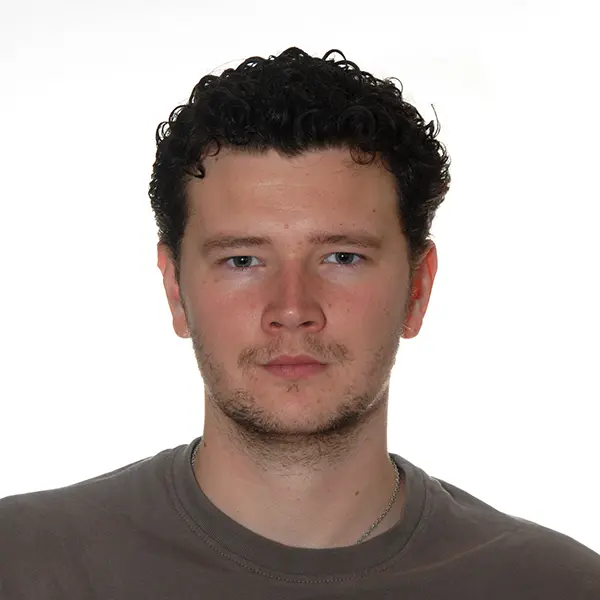
Daniel de la Guerra is a multilingual screenwriter and writer who brings a global perspective to storytelling across film, television, and culture. Writing features and reviews for The Hollywood Insider, Daniel is passionate about exploring how stories can inspire change, foster empathy, and reflect the human experience. With a background in translation and a commitment to ethical storytelling, his work aligns closely with The Hollywood Insider mission to combine entertainment with meaningful education and philanthropy. Daniel’s writing invites readers to engage thoughtfully with the narratives that shape our world, celebrating creativity as both art and a catalyst for connection.
Jul 14, 2025
Table of Contents
AI, Actors & Anxiety: How Hollywood’s Digital Dilemma Is Rewriting the Rules of Stardom
Hollywood has always been a town built on illusion. On smoke, mirrors, and stars, on that fragile but brilliant dance between human vulnerability and crafted spectacle. But what happens when that illusion stops being human? When the vulnerability can be coded, generated, cloned?
Right now, beneath the box office numbers and summer releases, there’s a quiet panic settling over actors, writers, and creatives alike. It’s not just about AI replacing jobs, it’s also about identity, value, and the very soul of what it means to be an artist in this digital age. The dream factory is glitching, and everyone’s trying to figure out how to hold onto their voice when machines are learning to speak.
Let’s be honest: AI isn’t coming, t’s already here.
Studios are experimenting with AI-generated extras, voice cloning, and de-aging technology that makes 70-year-olds look 30 in seconds. A-list faces are being scanned for eternity, their likeness stored in servers like digital ghosts. There’s talk of performances being stitched together from archival footage. Entire commercials written and voiced by AI. It’s leads, voices, entire personas that can be replicated or “improved” with a few lines of code.
At first, it all seemed like magic. Technology has always pushed cinema forward, from color to CGI to motion capture. But now, the boundary between tool and replacement is blurring. Actors aren’t just using AI. They’re competing against each other.
A veteran voice actor told me recently, “They say they can synthesize my voice now. Pitch it. Clone it. But can they synthesize my soul?”
That’s the existential question echoing across every studio lot and union hall. It’s not just about jobs, it’s about artistry, ownership, and identity. Performers pour years into their craft, into understanding human nuance, emotion, and connection. AI mimics that. It doesn’t feel it.
And yet, AI keeps getting better at pretending it does.
When SAG‑AFTRA went on strike in 2023, one of the core issues was AI protection. Background actors were already being scanned once and used indefinitely. Some didn’t even realize they were signing away their likeness forever, for a single day’s pay. Others feared their scanned face might show up in a film they’d never auditioned for, saying words they never spoke. It’s Black Mirrormade real, and it’s no longer science fiction. It’s a union issue. A legal issue. A human issue.
Let’s get personal: the anxiety in L.A. right now isn’t subtle. I’ve felt it in coffee shop conversations between young actors. I’ve seen it in industry Reddit threads, where people wonder if AI will write the next season of their favorite show. I’ve heard it in casting workshops, where coaches now say, “Make sure you’re unique enough not to be copyable.”
Imagine hearing that.
“Be unique enough not to be replicated by a machine.”
What does that even mean? How do you protect your humanity from becoming data?
The fear isn’t irrational. In fact, it’s deeply rational. Because in an industry where budgets dictate art, and efficiency is often prioritized over integrity, it’s not hard to imagine a world where studios choose synthetic performers over real ones. No schedules. No egos. No unions. Just performance on demand, nonestop.
And that thought is terrifying, not just because it threatens livelihoods, but because it threatens the meaning behind those livelihoods.
Once upon a time, stardom meant mystery. It meant charisma, presence, that certain unnameable “it” factor. But how do we define “it” in an era where AI can generate charm on command?
If a computer can deliver the perfect smirk, the flawless monologue, the crowd-pleasing speech, what happens to the actor who used to get cast because they could do that better than anyone else?
This isn’t just a technological question. It’s a philosophical one. Can authenticity be faked? Can connection be programmed?
To some extent, audiences will always love spectacle. AI might create the next crowd-pleasing action star. But connection… that’s different. We cry not because an actor is perfect, but because we see their imperfections. Their humanity.
For those just breaking in: writers, actors, voice artists, even editors, this moment is dizzying. You work your whole life to get in the room, only to find out the room might soon be digital. Your voice? Trainable. Your face? Scannable. Your uniqueness? Potentially up for sale.
Young creatives are adapting faster than anyone. They’re learning to use AI tools without letting those tools define them. They’re finding ways to amplify their voices, not erase them. And they’re pushing for ethics, and legislation that prioritizes artists over algorithms.
One of the biggest issues right now is that there simply aren’t enough laws protecting actors and creatives from having their likeness or voice used without permission. Deepfakes, unauthorized clones, synthetic voiceovers… they’re happening. And in many cases, they’re not illegal. Just… wrong.
In some contracts, studios are asking for “perpetual rights” to an actor’s performance, including digital replicas of their face and voice. If you’re desperate for work, what choice do you have but to sign?
We need legal frameworks that protect artists from becoming commodities. That draw lines between creative collaboration and exploitation. That understands the difference between using technology to enhance a performance, and using it to erase the performer altogether.
Let me leave you with this. Hollywood isn’t about perfection. It never was. The greatest performances come from imperfection: flaws, cracks, emotion that feels raw and unpolished. No AI can replicate the wayHeath Ledger licked his lips as the Joker, or the shaky breathViola Davis takes before a monologue. Those are human moments. Real moments.
And those moments are why we watch movies. Why we go to theaters. Why we care. AI can mimic. But it can’t care. Not like we do.
So yeah, the anxiety is real. But so is the passion. So is the resistance. So is the fire that’s always burned in every actor who ever stood on a stage, or every writer who ever stared down a blank page thinking, “What if I’m not good enough?”
You are. We are. And the future of storytelling still belongs to us humans.
Daniel de la Guerra is a multilingual screenwriter and writer who brings a global perspective to storytelling across film, television, and culture. Writing features and reviews for The Hollywood Insider, Daniel is passionate about exploring how stories can inspire change, foster empathy, and reflect the human experience. With a background in translation and a commitment to ethical storytelling, his work aligns closely with The Hollywood Insider mission to combine entertainment with meaningful education and philanthropy. Daniel’s writing invites readers to engage thoughtfully with the narratives that shape our world, celebrating creativity as both art and a catalyst for connection.
Daniel de la Guerra is a multilingual screenwriter and writer who brings a global perspective to storytelling across film, television, and culture. Writing features and reviews for The Hollywood Insider, Daniel is passionate about exploring how stories can inspire change, foster empathy, and reflect the human experience. With a background in translation and a commitment to ethical storytelling, his work aligns closely with The Hollywood Insider mission to combine entertainment with meaningful education and philanthropy. Daniel’s writing invites readers to engage thoughtfully with the narratives that shape our world, celebrating creativity as both art and a catalyst for connection.
Daniel de la Guerra is a multilingual screenwriter and writer who brings a global perspective to storytelling across film, television, and culture. Writing features and reviews for The Hollywood Insider, Daniel is passionate about exploring how stories can inspire change, foster empathy, and reflect the human experience. With a background in translation and a commitment to ethical storytelling, his work aligns closely with The Hollywood Insider mission to combine entertainment with meaningful education and philanthropy. Daniel’s writing invites readers to engage thoughtfully with the narratives that shape our world, celebrating creativity as both art and a catalyst for connection.